
TL;DR
Dry needling targets trigger points in tight muscles to relieve pain and improve mobility. Learn how this evidence-based technique works and what to expect.
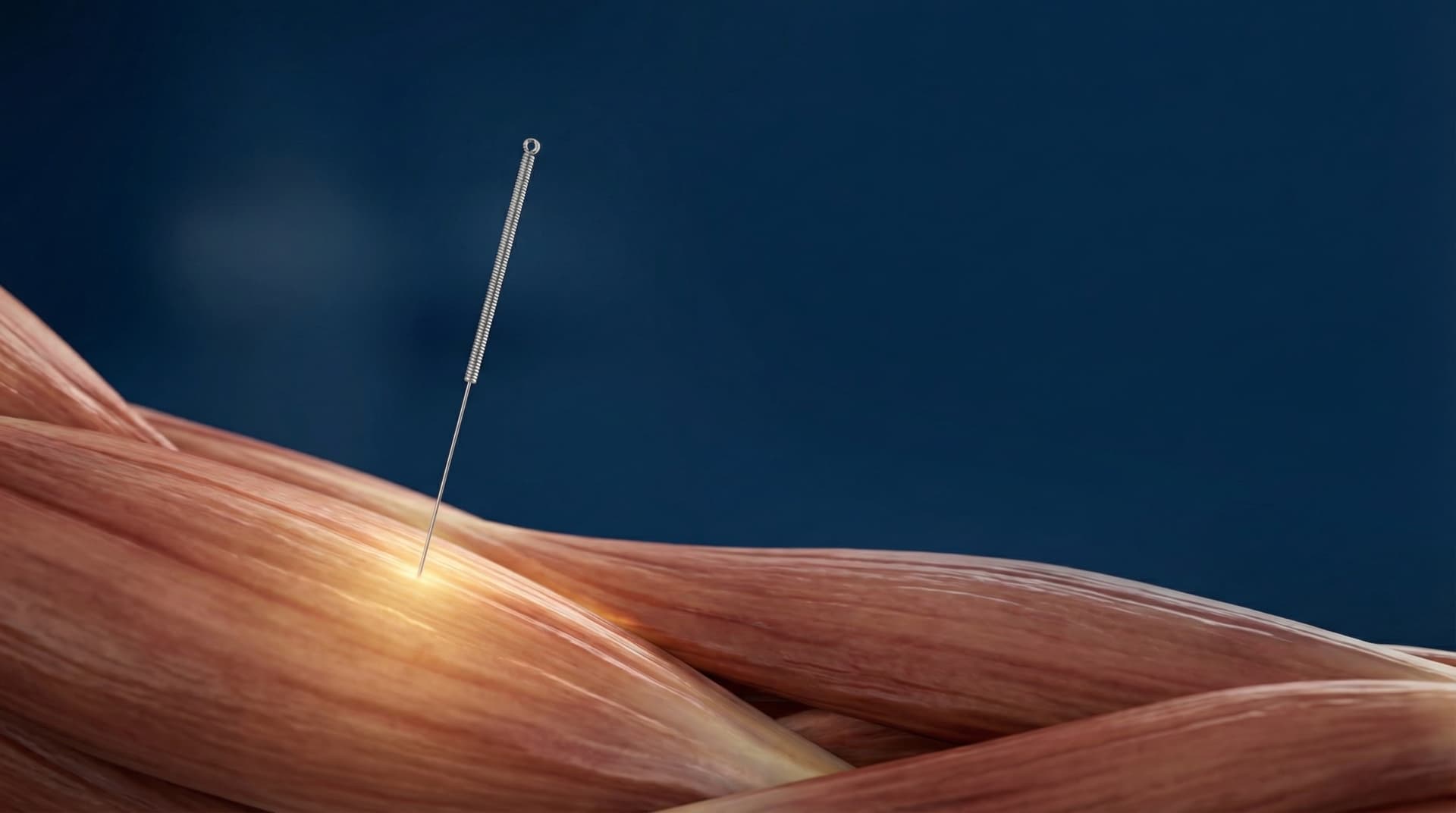
If you have been dealing with chronic muscle tension, knots that massage cannot seem to release, or pain that keeps coming back despite stretching and exercise, dry needling may be the missing piece in your treatment plan.
Dry needling is a clinical technique that uses thin, solid filament needles to release myofascial trigger points,those tight, knotted bands within muscles that cause pain, restrict movement, and refer discomfort to other parts of the body.
How Dry Needling Works
When a thin needle is inserted into a trigger point, it creates a local twitch response,a brief, involuntary contraction of the muscle fiber. This twitch is the therapeutic mechanism. It resets the contracted tissue, improves blood flow to the area, and breaks the cycle of chemical irritation that keeps the trigger point active.
The result: reduced muscle tension, decreased pain, and improved range of motion. For patients receiving chiropractic care, dry needling also helps muscles release their grip on misaligned joints, making adjustments more effective and longer-lasting.
Dry Needling vs. Acupuncture
This is the most common question we hear. Both techniques use thin needles, but the theory and application differ.
Acupuncture is based on traditional Chinese medicine and targets meridian points to influence energy flow throughout the body. Dry needling is based on Western neuroanatomy and modern pain science. We identify specific trigger points through clinical examination and insert needles directly into the dysfunctional muscle tissue.
At ACN, our dry needling is guided by palpation, anatomical knowledge, and your specific pain pattern,not meridian charts.
What Conditions Respond to Dry Needling?
Dry needling is effective for a range of musculoskeletal conditions where myofascial trigger points contribute to pain and dysfunction:
- Chronic neck and back pain
- Tension headaches and cervicogenic headaches
- Shoulder impingement and rotator cuff pain
- TMJ dysfunction and jaw tension
- Sports injuries and overuse conditions
- Sciatica-related muscle guarding
- Myofascial pain syndrome
What to Expect During Your First Session
Your doctor evaluates your muscle tissue, identifies trigger points, and explains the treatment before any needles are used. During the session, you may feel a brief deep ache or twitch when the needle reaches the trigger point. Most patients describe it as a mild discomfort that passes quickly.
Sessions last 15 to 30 minutes depending on the number of areas treated. Post-treatment soreness is normal and resolves within 24 to 48 hours. Most patients notice improvement after one to three sessions.
Both Dr. McClaren and Dr. Carter perform dry needling at our La Vista office. Call 402-597-2869 to find out if dry needling is right for your condition.
Related Services & Conditions
Have Questions? We Can Help.
Our team at Advanced Chiropractic & Neurology is here to answer your questions and help you get the care you need.