
TL;DR
Dizzy when you stand up? Heart racing for no reason? These could be signs of dysautonomia, a condition affecting the autonomic nervous system.
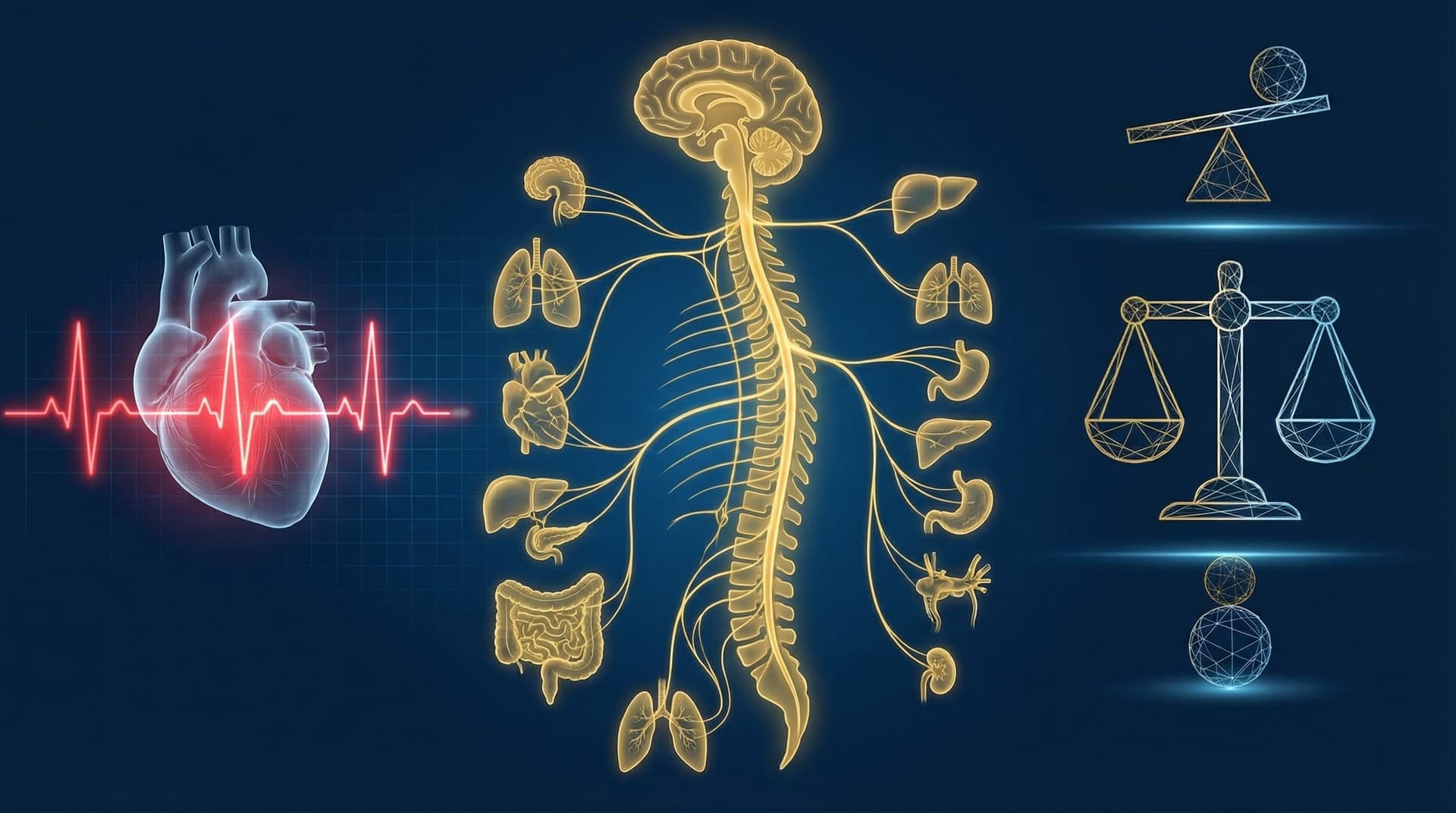
You stand up and the room spins. Your heart rate jumps to 120 for no reason. You used to exercise without thinking about it, and now a walk around the block leaves you exhausted. Your doctor has run every test and told you everything looks normal.
If this sounds familiar, dysautonomia may be the answer. Dysautonomia is a dysfunction of the autonomic nervous system,the system responsible for controlling your heart rate, blood pressure, digestion, temperature, and dozens of other involuntary functions your body manages without conscious effort.
What Dysautonomia Looks Like
Dysautonomia is not a single disease. It is a category of conditions that share a common mechanism: the autonomic nervous system is not regulating properly. The most common form is Postural Orthostatic Tachycardia Syndrome (POTS), where your heart rate increases excessively when you move from lying down to standing.
Symptoms vary but commonly include:
- Dizziness or lightheadedness when standing
- Rapid heart rate that seems unrelated to activity
- Fainting or near-fainting episodes
- Exercise intolerance,getting wiped out by minimal effort
- Chronic fatigue
- Nausea, bloating, and digestive problems
- Difficulty regulating body temperature
- Brain fog and trouble concentrating
Why Dysautonomia Gets Missed
Standard medical exams often miss dysautonomia because the tests look normal when you are lying down. Your heart rate is fine. Your blood pressure is fine. Your blood work is fine. But the moment you stand up, everything changes,and standard exams do not always catch the positional changes.
Functional neurology uses orthostatic testing (measuring vital signs in different positions), heart rate variability analysis, and targeted neurological examination of autonomic pathways to identify dysfunction that standard exams miss.
The Connection to Concussions, Long COVID, and Hypermobility
Dysautonomia rarely exists in a vacuum. It frequently co-occurs with post-concussion syndrome (head injuries can damage autonomic regulation centers in the brainstem), Long COVID (the post-viral inflammatory response can disrupt autonomic function), and hypermobility spectrum disorders (connective tissue laxity can affect the blood vessels and autonomic nerves).
At ACN, we evaluate for these overlapping conditions because treating dysautonomia in isolation often produces incomplete results. If your autonomic dysfunction is connected to a brain injury, a viral infection, or a connective tissue condition, the treatment plan needs to account for all of it.
How We Treat Dysautonomia
Our approach uses functional neurology to improve autonomic regulation through targeted rehabilitation. This includes vagus nerve exercises to improve parasympathetic tone, graded exercise protocols designed for patients with exercise intolerance, vestibular rehabilitation when dizziness and balance are involved, breathing retraining to influence autonomic balance, and cervical spine care to address structural factors affecting autonomic pathways.
We work alongside your cardiologist or primary care physician. Our role is neurological rehabilitation,training your autonomic nervous system to regulate more effectively.
If you have been struggling with unexplained dizziness, heart rate issues, or fatigue, call Advanced Chiropractic & Neurology at 402-597-2869 to schedule your evaluation.
Related Services & Conditions
Have Questions? We Can Help.
Our team at Advanced Chiropractic & Neurology is here to answer your questions and help you get the care you need.